


It is hard to imagine a world without Harley-Davidson making motorcycles, but the truth is the company was very close to going bankrupt in the 1980s. After purchasing Harley-Davidson in 1969, American Machine and Foundry (AMF) had severely damaged the brand's image and reputation.
Decisions to cut the workforce and streamline production resulted in a lower quality product and disgruntled workforce that eventually resulted in a labor strike. After 12 years of mismanagement, the company was sold back to a group of 13 investors (including Willie G. Davidson) for a mere 80 million dollars. They began designing the Evolution engine shortly afterwards, and the rest is history.
 Tim Stat's EVO Chop at Fuel Cleveland - Photo by: David Carlo
The engine that saved Harley-Davidson from Bankruptcy
When did Harley introduce the Evolution? Harley Davidson has come a long way since their first motorcycle prototype built in 1903. The Evolution (Evo) engine is a V-twin engine that has been manufactured and used by Harley-Davidson since 1984 for a variety of different Harley motorcycle models.
The engine design is often credited with saving Harley-Davidson from bankruptcy after the management buyout and subsequent reorganization by American Machine and Foundry (AMF) that the company went through during the early 1980s.
The name "evolution" was likely strategically chosen to coincide with a rebranding process that redefined Harley's image and helped regain its dwindling market share. Harley's Japanese competition had "evolved" and it was time to show their customers that they could, too.
 Here's a really cool U.S. Patent diagram for the Harley-Davidson Evo motor.
Advanced Design Helped Reestablish Harley-Davidson
Although the Evolution's engine design offered many advantages compared to previous Harley designs, the most important upgrades improved reliability and durability. After all, a large part of the company's downfall in the 70s had been due to outdated engine designs.
The competition, particularly the Japanese companies, continued to innovate, creating motorcycles that lasted longer and cost lest to maintain than Harleys at the time. What little profit Harley-Davidson did manage to make at the time was wasted satisfying a growing number of warranty claims.
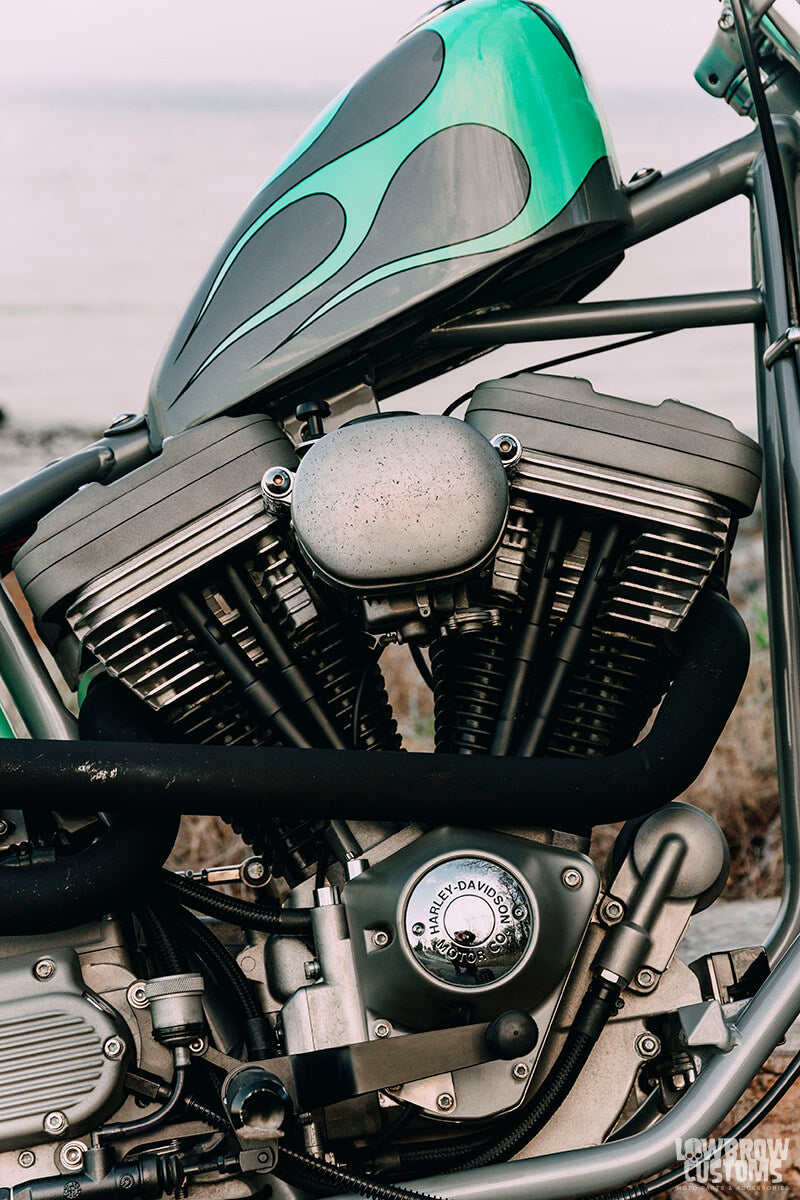 Alex Fields' 1998 Evo - Photo by Liam Kennedy
What is a Harley-Davidson Evolution (EVO) Motor?
The Evolution engine, also known as Evo or Blockhead, is a legendary air-cooled V-twin engine that Harley-Davidson introduced in 1984. This engine design has been a vital part of Harley-Davidson's history and has powered many of their bikes over the decades. The unique 45-degree V-twin layout is a signature feature of the Harley-Davidson brand and is adored by motorcycle fans around the world.
The newly designed Harley-Davidson Evo engine relied on aluminum heads and cylinders - as opposed to the heavy cast iron parts of the Shovelhead (their previous Big Twin bike V-Twin engine) and other predecessors. This shift from the older cast-iron components seen during the ironhead years of the Sportster lineup to aluminum led to a lightweight engine with improved air-cooling efficiency.
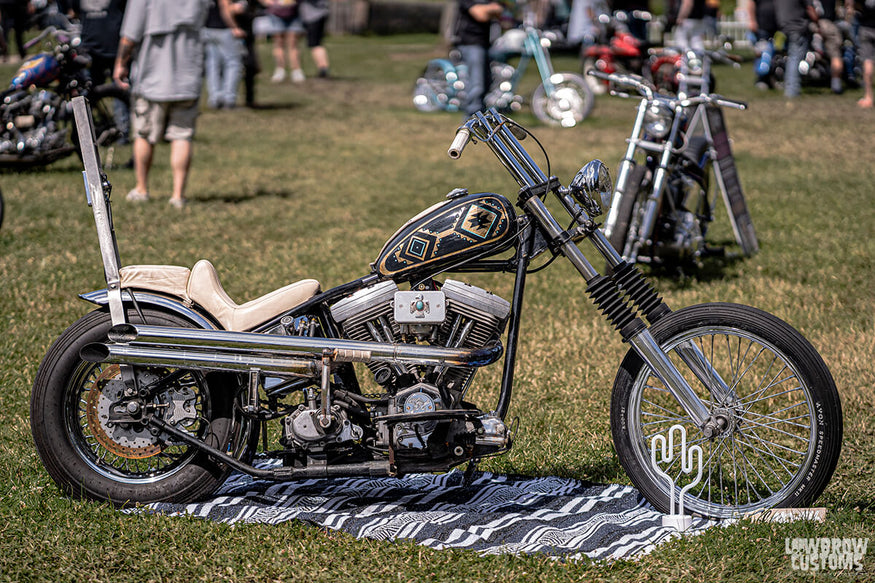 Evo Chop from Mitchell Glen at Fuel Cleveland - Photo by David Carlo
Why is the Evo engine made from aluminum?
Since aluminum is a much better thermal conductor than iron, using aluminum also resulted in less wear and tear on head gasket seals and thus helped to make the engine much more durable than ever.
 Fxr from Perks Cycles at Fuel Cleveland - Photo by David Carlo
The head gasket seals on the outdated Shovelhead engine were made of a combination of aluminum and cast iron, which caused unnecessary stress due to the different expansion rates and chemical properties of those two metals. This improved durability not only helped reestablish Harley-Davidson as an authority in the motorcycle industry, but also cut down significantly on their warranty costs.
Evolution in the Sportster
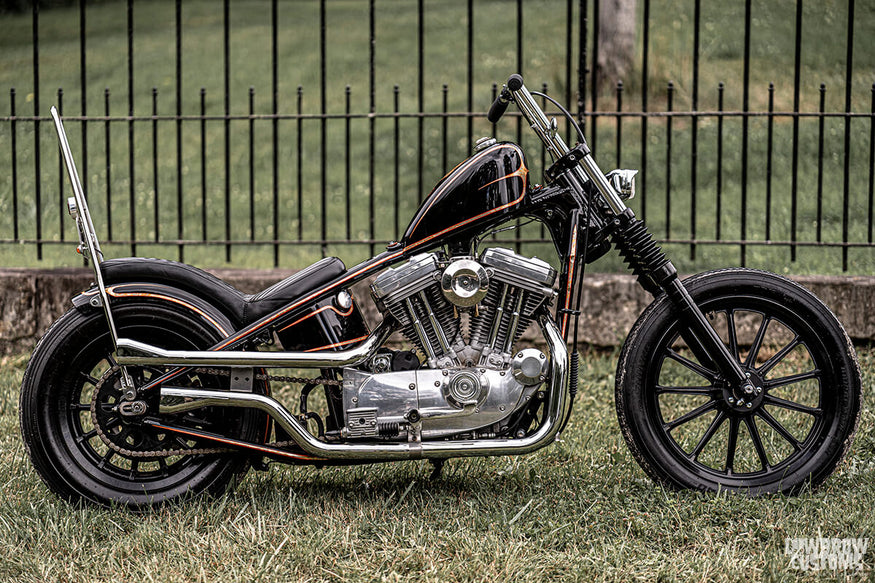 Mikey Revolt's 2000 Sportster at Fuel Cleveland - Photo by David Carlo
In 1986, Harley-Davidson upgraded the Sportster with the newly designed Evo engine, replacing the Ironhead that had become a staple of the Sportster since its inception. Harley's decision to stick with the semi-unit construction of previous Sportsters resulted in a distinctly configured valve train.
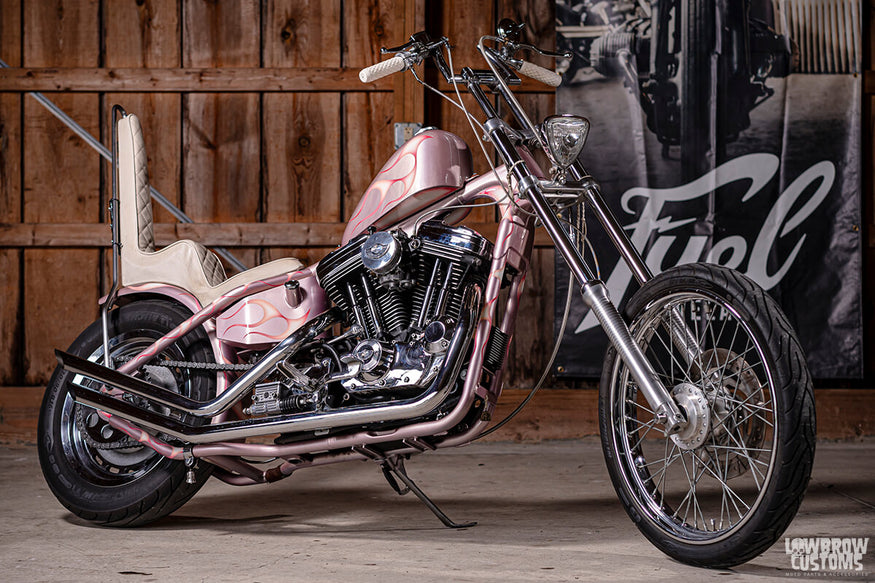 Amanda Weaver's Sportster at Fuel Cleveland - Photo by David Carlo
Unlike most of today's motorcycle engines, the Sportster Evo uses just one cam per each overhead valve, resulting in four independent gear driven camshafts. This setup results in cam lobes that are inline with each other, resulting in a parallel pushrod configuration. This design allows for VERY powerful cams.
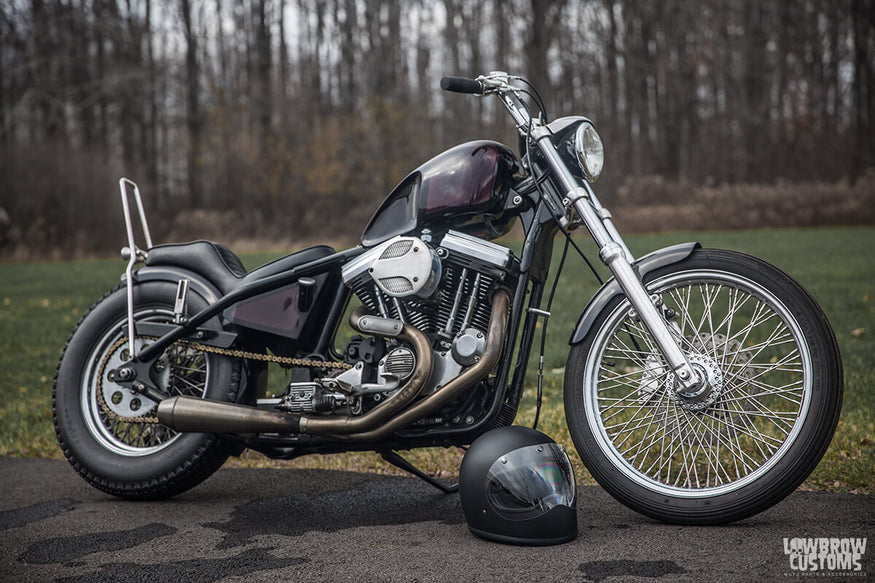 Lowbrow Customs 2003 Sportster with Evo Heads and over sized cams.
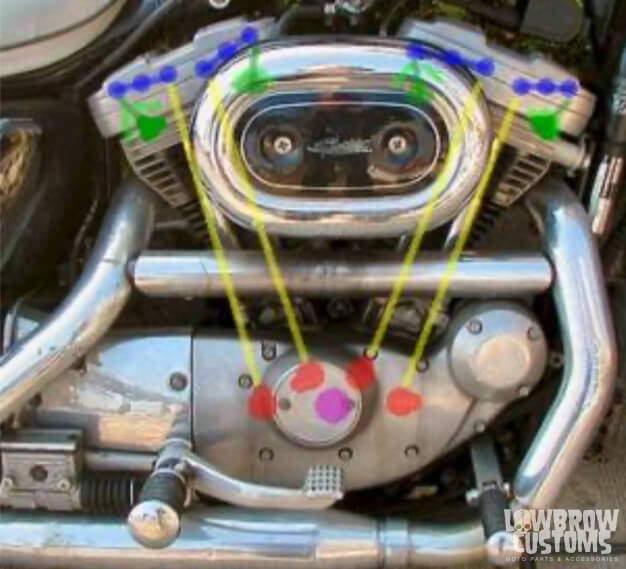 Harley Evolution valvetrain with diagram: Purple indicates crank output, red indicates cams, yellow indicates pushrods, blue indicates rockers, dark green indicates valves, and light green indicates seats.
Evolution in the Big Twin Bikes
Since its inception in 1986, the Sportster Evo engine design has remained relatively untouched. Harley has updated other parts of the Sportster, most notably the transmission and motor mounts, resulting in some corresponding engine tweaks along the way.
There are few differences in the construction of the 883 and 1200 cc Sportster Evo engines, the main one being a smaller bore on the 883 cc version. Because of the similarities, many people choose to upgrade their 883 Sportster with custom Harley parts to 1200 cc. Surprisingly, this can often be achieved at a much lower price than buying the factory 1200 cc version.
Here is one option: S&S Sportster 883cc to 1200cc conversion kit
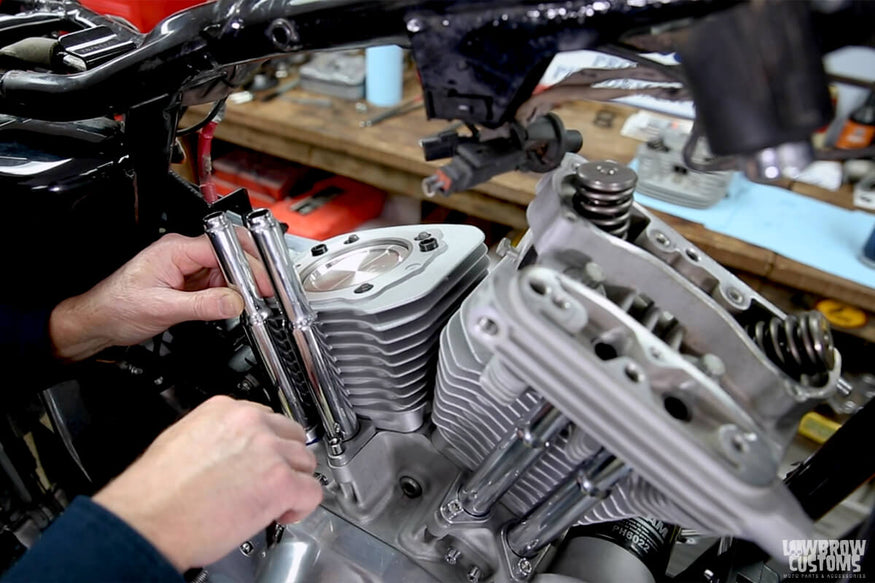 We have a full Youtube video series showing how easy it is to convert an 883 to 1200.
With this reasonably priced kit, you can upgrade your 883 Sporty to a 1200 with no head modification needed whatsoever. The pistons weigh exactly the same as your stock 883 pistons, eliminating the need for rebalancing your flywheels and absolutely no machining is necessary.
Installation of this kit takes about the same amount of time as replacing the stock top end would, but you're guaranteed to have a bit more fun afterwards. Considering the factory 1200 cc Sporty costs over two grand more than its 883 cc counterpart, it's no surprise that many people buy the 883 and upgrade to the big bore head themselves.
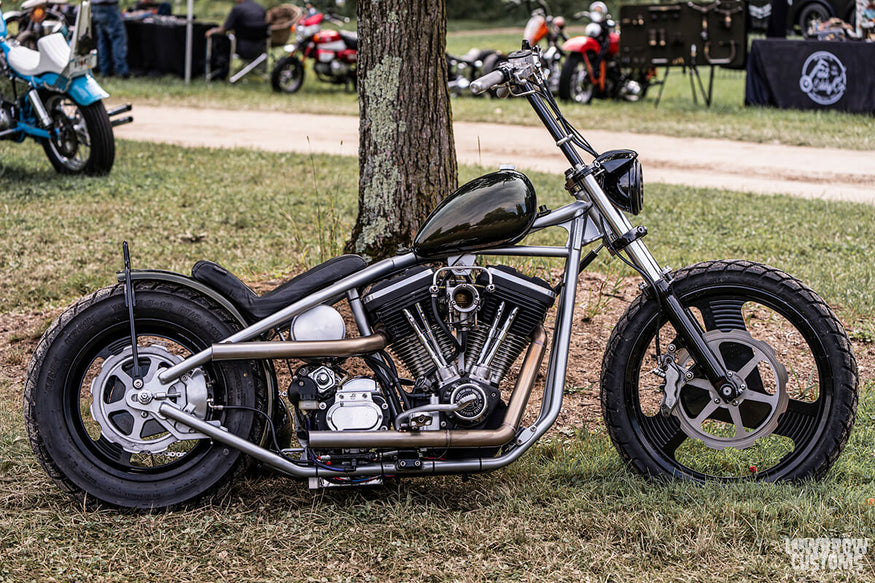 Davey Mattei's Big Twin Evo Chop at Fuel Cleveland - Photo by David Carlo
Year Harley-Davidson stop making the Evo motor
- Last year of EVO's in Baggers - 1998
- Last year of EVO's in Softails - 1999
- Last year of EVO's in FXR's - 2000
Until 2000, when the last Harley-Davidson Evolution engine was produced.
Some more photos of Evo Big Twins and Evo Sportsters
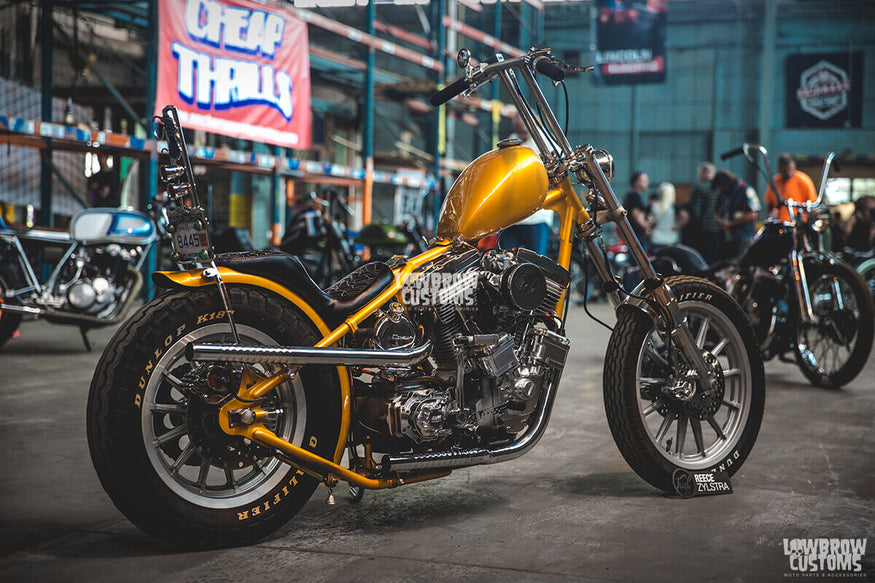 Reece Zylstra's Evo chopper from Fuel Cleveland.
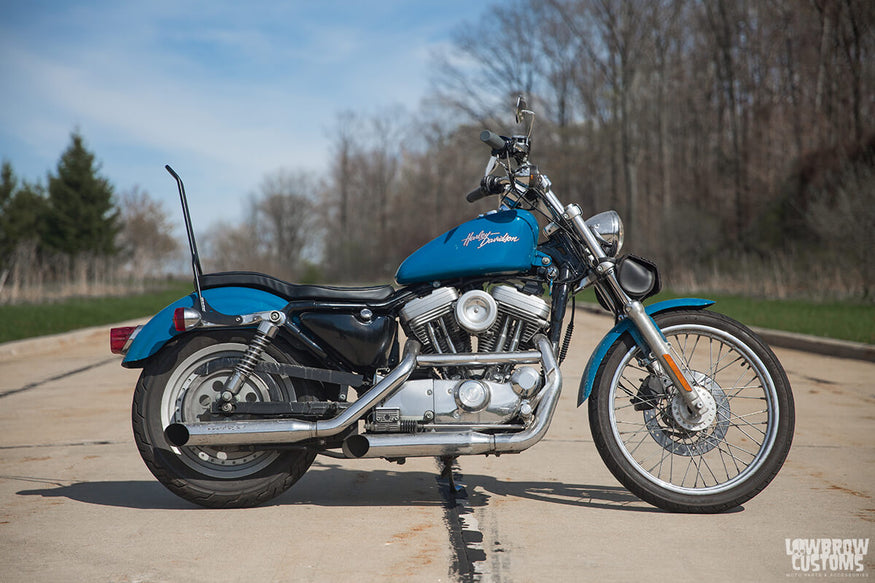 Longhair's stock Evo Sportster.
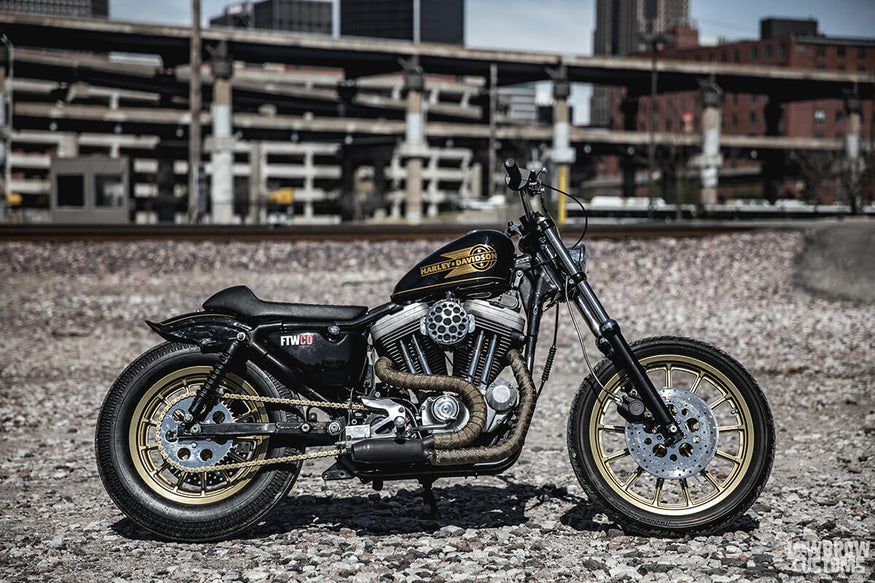 Tracker Style Evo Sportster.
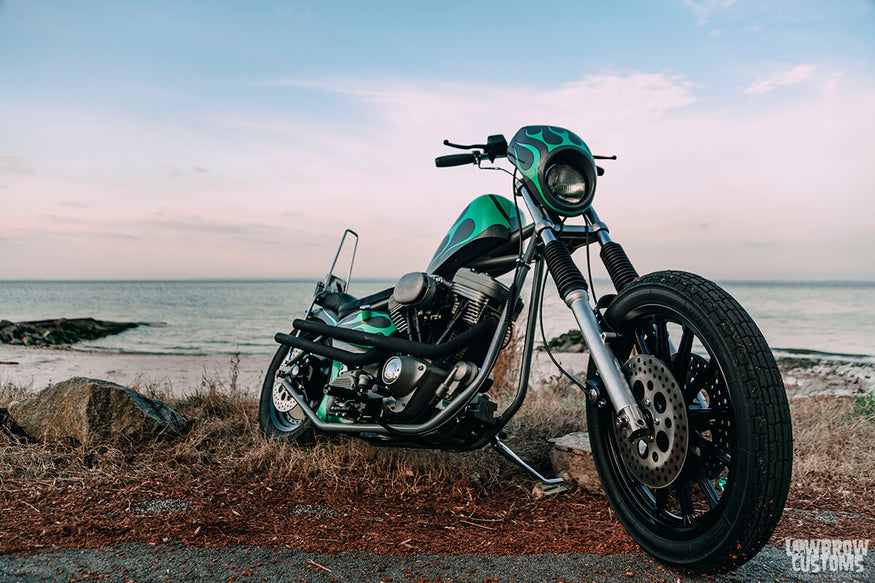 Alex Fields Evo. Photo by: Liam Kennedy
 Juli Sue Willow's 2013 Evo Sportster.
As we bid farewell to the Evo era, Harley-Davidson continues to evolve and innovate. The commitment to pushing boundaries and embracing new horizons ensures that the Harley-Davidson spirit remains ever-vibrant. The road ahead is as exhilarating as the one behind, promising a future where Harley-Davidson's legacy continues to thrive. Join our blog on a journey through time as we uncover the captivating story and timeless impact of these iconic power plants.
Harley-Davidson Evolution Engine FAQs
Q: What are the most important things to check when buying a used Evo-powered Harley?
A: Five priorities: inspect the rocker boxes for oil leaks — hardened gaskets are common on high-mileage Evos and a wet rocker box indicates deferred maintenance. Do a cold compression test on both cylinders — readings should be above 160 psi and within 10% of each other. Check the compensator sprocket at startup — a rattling clunk that disappears once warm points to a worn compensator, a known Evo issue. Inspect charging system voltage at idle (should be 13.5–14.5V). Confirm the primary and transmission oils are clean and at the correct level.
Q: What carburetor does the Harley-Davidson Evolution Big Twin use, and what are the common upgrades?
A: Most 1984–1999 Evo Big Twins use a Keihin 40mm CV (constant velocity) carburetor. It is a reliable, well-proven unit that responds well to jetting changes for altitude or performance modifications. Common upgrades include the S&S Super E or Super G carbs (larger, higher-flow, suitable for modified engines) and the Mikuni HSR 42 or 45 (popular with touring riders for its smooth delivery at highway speeds). The stock CV carb is fully adequate for a stock or lightly modified engine.
Q: Can an Evo engine be bored to a larger displacement, and what are the common options?
A: Yes — the Evo case accepts larger cylinder kits. S&S, RevTech, and others offer 88ci, 95ci, and even 100ci big bore kits using aftermarket cylinders and pistons. The stock lower end (flywheels and cases) handles the additional displacement well in most cases. An 88ci kit on a healthy Evo short block is a popular upgrade that adds noticeable torque without a full engine replacement, and keeps the proven Evo architecture intact.
Q: How does the Evolution Big Twin differ from the Evolution Sportster engine?
A: They are entirely different engine designs that share only the name and the aluminum construction philosophy. The Big Twin Evo displaces 1340cc and uses a unit-design 4-speed or 5-speed transmission in a separate case. The Sportster Evo displaces 883cc or 1200cc and uses a true unit construction where engine and transmission share one crankcase. Parts are not interchangeable between the two. The Sportster Evo continued in production until 2021 — 22 years longer than the Big Twin Evo.
Q: How does the Evolution engine compare to the Twin Cam 88 that replaced it in 1999?
A: The Twin Cam adds 8ci of displacement (88 vs 80ci), improved breathing, and better low-end torque. However, early Twin Cam engines (1999–2006) had a significant weakness — plastic cam chain tensioner shoes that wore and caused cam timing failures. Many experienced mechanics consider a well-maintained Evo more reliable than an early Twin Cam specifically because of this issue. The 2007+ Twin Cam revised the tensioner design and is generally more reliable. For custom builds, the Evo's simplicity and parts availability remain strong arguments in its favor.
Related Posts
Related Products


