


HOW TO ADJUST YOUR CLUTCH ON A HARLEY SPORTSTER
"When's a good time to adjust your clutch?" you ask. Well, take for instance if your clutch lever feels super loose, or when you're shifting your motorcycle doesn't easily go into higher or lower gears. Hell, it is also time to adjust it if you are having a really hard time finding neutral!
These are telltale signs that your clutch cable needs a bit of attention. It is an easy task that can be completed in your home garage (or driveway) with some basic hand tools, and we show you how to do it below!
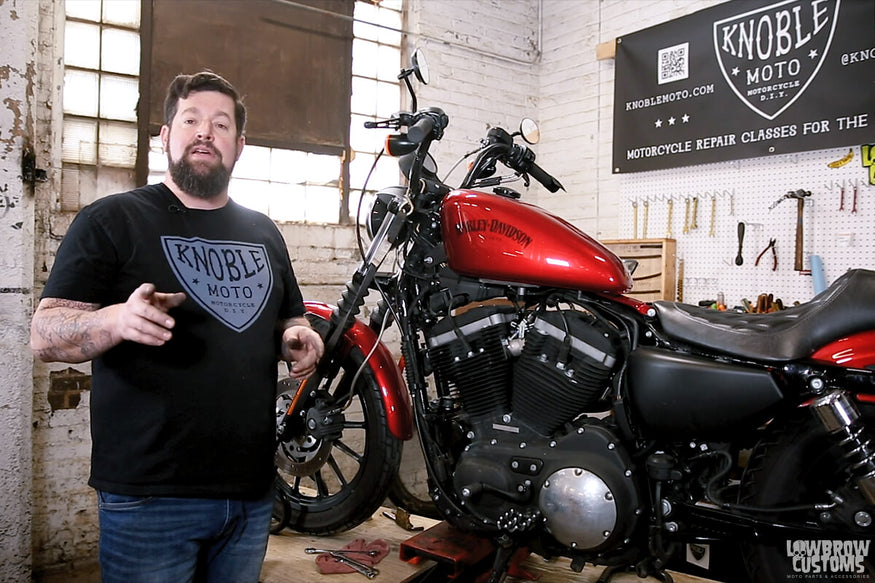
WATCH VIDEO: HOW TO ADJUST YOUR CLUTCH ON A HARLEY-DAVIDSON SPORTSTER
"But, how do I do that?" Don't worry we got you covered with another great Knoble Tech Tip from Steve Knoble.
With a few quick steps and a couple hand tools you can get this tackled with no problem at all on your own. Steve gives you a few helpful tips and things to look for when adjusting your clutch and you will soon become a pro.
If you are in need of a clutch cable, we have you covered. Not only do we carry standard clutch cables for Harley-Davidson motorcycles, we also have great prices on extended +4" length cables should you want to install taller handlebars, and 'blacked out' cables with black adjusters for that 'look how tough and black my bike is' look. Wink. And don't forget the matching Harley throttle and idle cables.
HOW TO ADJUST YOUR CLUTCH ON YOUR SPORTSTER IN 4 EASY STEPS
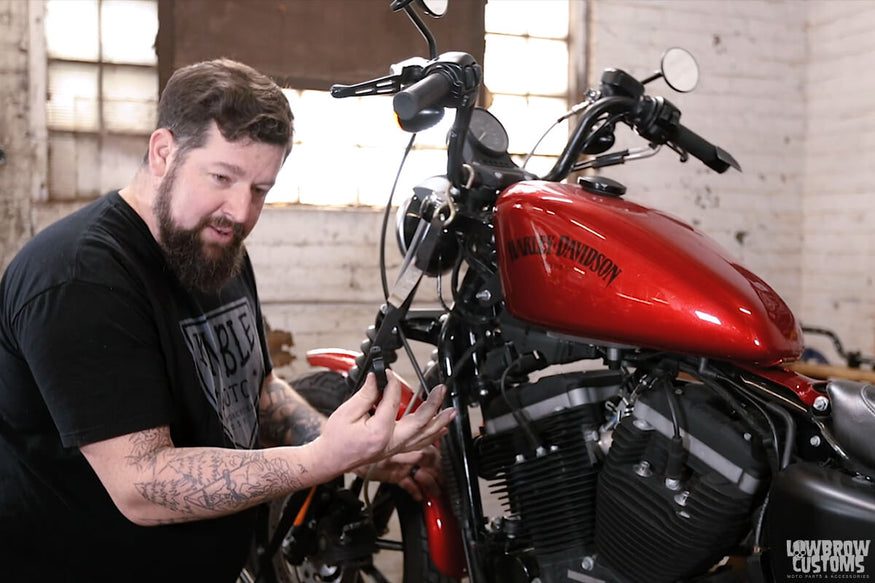 Most newer Sportsters have these little clip dodads holding the clutc cable to the frame, remove those to get the clutch cable free.
STEP 1: REMOVE ANY CLIPS OR ZIP-TIES HOLDING THE CLUTCH CABLE, EXPOSE YOUR LOCK NUT / ADJUSTER AND BREAK THE LOCK NUT
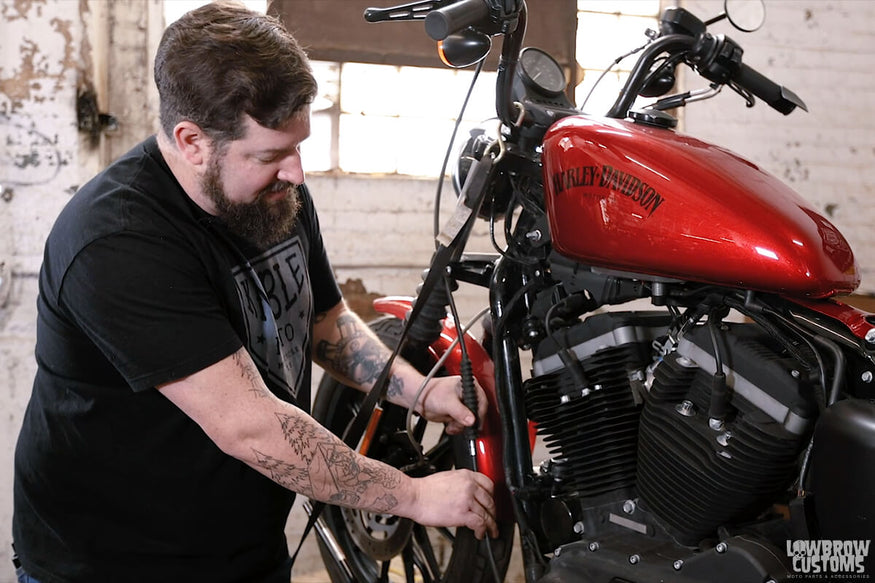 Pull up on the rubber "slinky" boot and expose your adjuster.
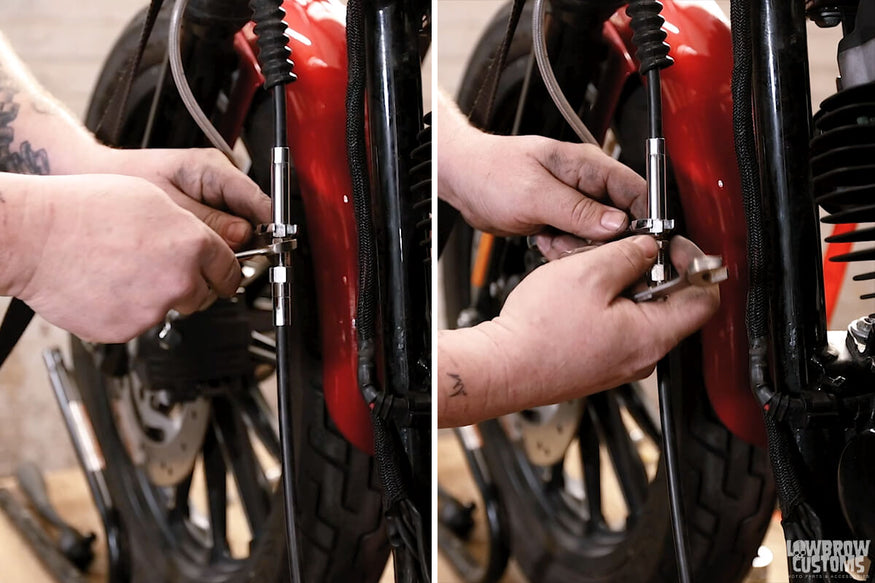 With two wrenches break free the locking nut and move it down to give your self room to adjust the cable.
STEP 2: ADJUST YOUR CABLE, WATCH LEVER PULL IN AS YOU TIGHTEN CABLE.
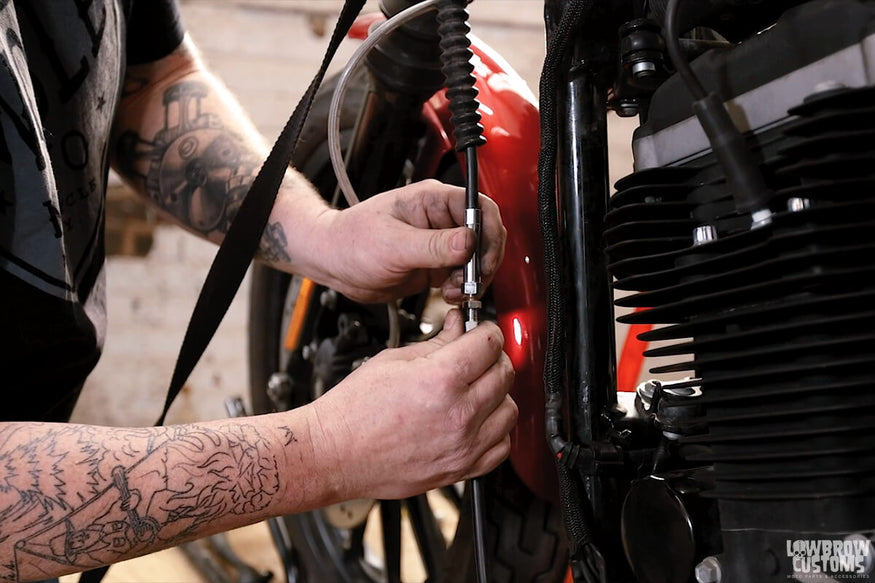 Turning the adjuster clockwise tightens the cable, turning it counterclockwise loosens the cable.
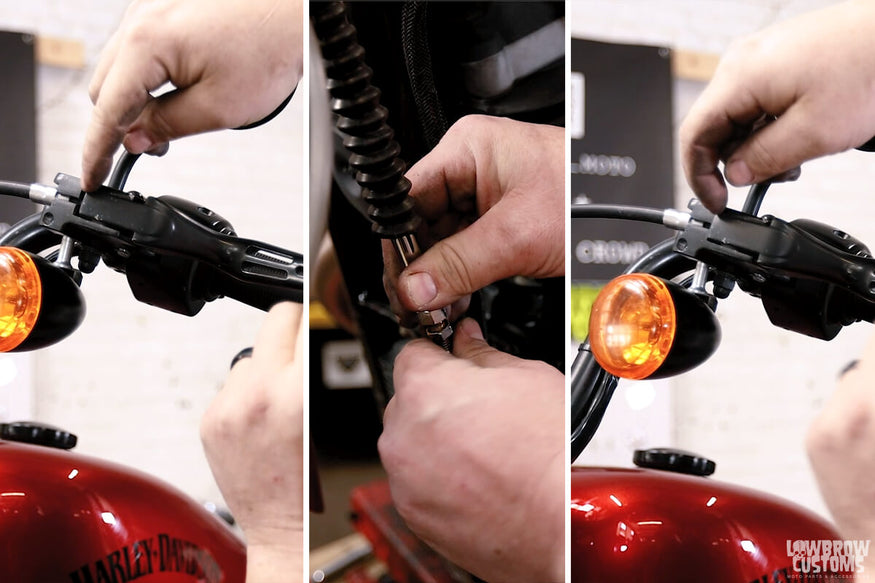 Watch the gap in your clutch lever as you turn the adjuster clockwise. Stop tightening the clutch cable once the clutch lever gap is gone.
STEP 3: TURN THE ADJUSTER COUNTERCLOCKWISE TO GIVE A LITTLE PLAY IN THE CLUTCH LEVER
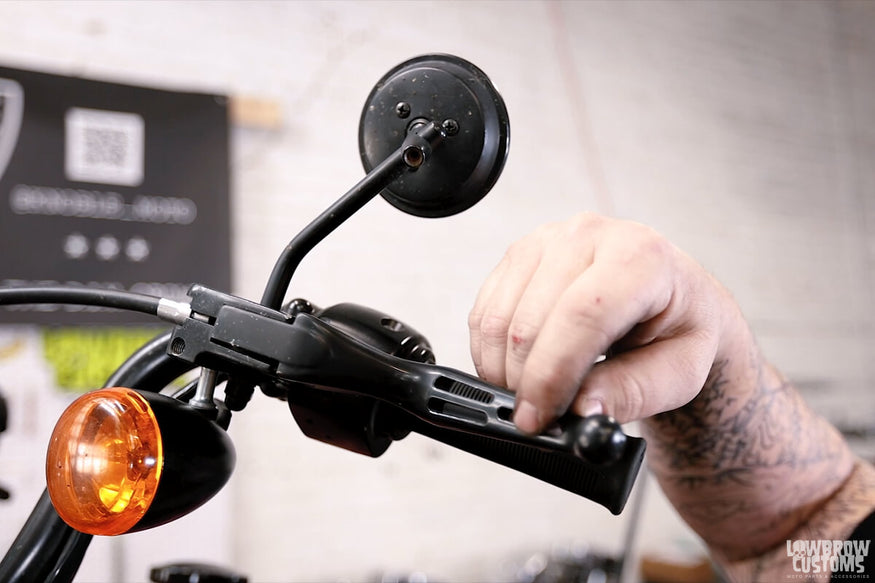 Pull on the clutch lever and feel if there is any play or if it extremely stiff after loosening the adjuster a little.
STEP 4: TIGHTEN THE LOCK NUT. LOCK YOUR ADJUSTMENT DOWN. SLIDE "SLINKY" BOOT BACK OVER. CLIP CABLE BACK TO FRAME. TEST CLUTCH LEVER.
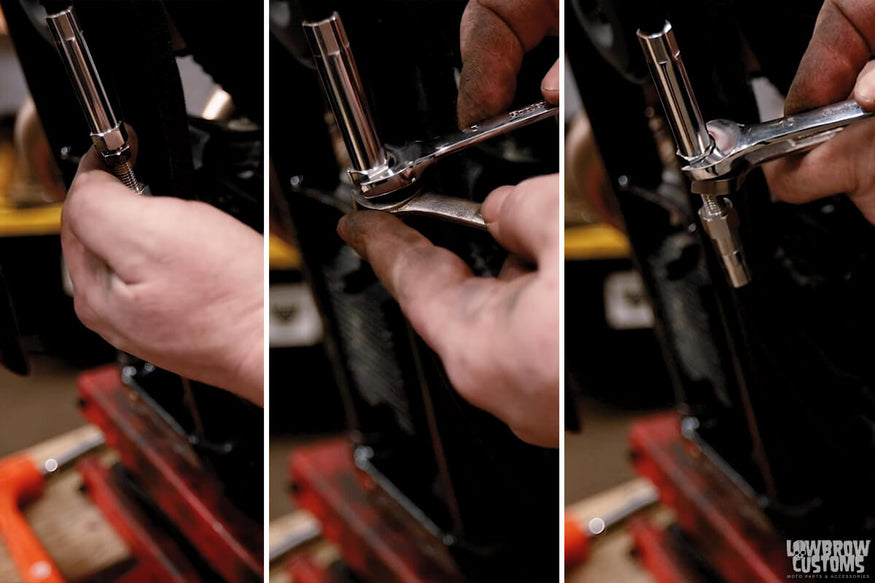 Tighten the lock nut and lock the adjuster without changing your adjustment.
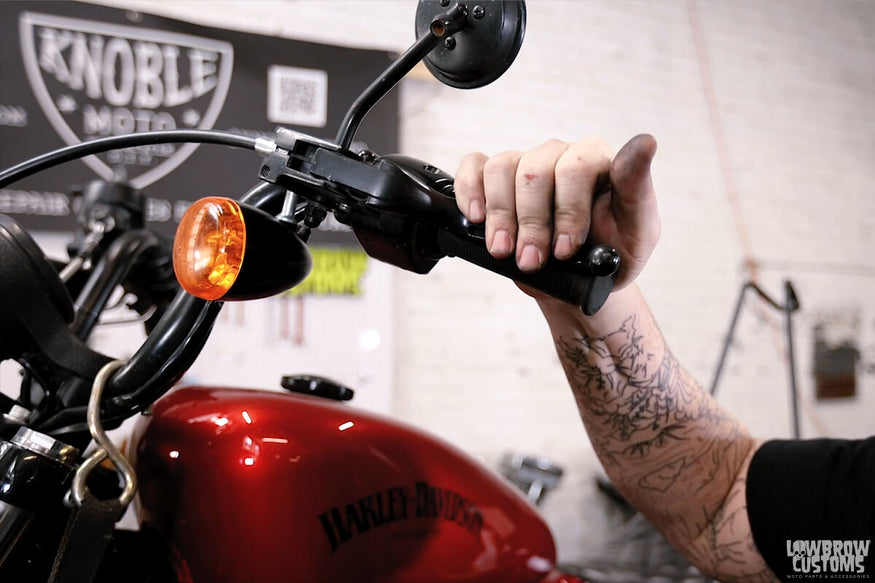 Test your clutch lever and make sure it still has the same play as when you adjusted it. Make sure you didn't mess up your adjustment when you tightened the locknut. If you did, loosen the locknut and readjust, repeating step 2, 3, and 4.
 Slide your "Slinky" boot back over your adjuster and clip your cable back onto the frame and or use zip-ties. That's it you're ready to go for a ride!
FAQs
Q: How do I know when a Harley Sportster clutch cable should be replaced rather than adjusted?
A: Adjustment corrects slack — it cannot fix physical cable damage. Replace the cable if: you see fraying anywhere along the cable length (a broken strand means full failure is imminent); the cable kinks at any point, including near the lever or at the adjuster; the inner wire feels gritty or doesn't move freely inside the housing after lubrication; or the cable has been adjusted to its full travel limit with no remaining adjustment range left. A cable at the end of its adjustment range is telling you it has stretched beyond usable life.
Q: How long does a Harley Sportster clutch cable typically last before needing replacement?
A: A quality clutch cable on a well-maintained Sportster typically lasts 20,000–40,000 miles or 3–5 years of regular use. Cables on bikes with taller handlebars (ape hangers) that create tight routing bends wear faster — the tighter the bend, the more the inner cable grinds against the housing at that point. Lubricating the cable annually with a cable lubricant tool (a simple $10 tool that forces lubricant down the housing) significantly extends cable life and keeps the clutch pull light.
Q: If I install taller handlebars on my Sportster, will I need a longer clutch cable?
A: Almost certainly yes. Taller or wider bars increase the distance the cable must travel from the lever to its anchor point, pulling the existing cable taut. A cable that is too short creates constant tension on the clutch — potentially causing premature clutch wear and inconsistent feel. When building a Sportster with ape hangers or significantly different bars, measure the existing cable path, add the additional height of the new bars, and order a custom-length cable or a universal cable that can be cut to length. Never route a cable in a tight S-bend to compensate for insufficient length.
Q: Is there a difference in how clutch cable adjustment works between pre-2004 and post-2004 Sportsters?
A: Both generations use a cable-operated clutch but have different primary cover layouts, which affects access to the tension plate adjustment. The 1986–2003 rigid-mount Sportster has the adjustment access point in a similar location to what is shown in the article. The 2004+ rubber-mount Sportster has a revised primary design with slightly different access. The fundamental adjustment logic is identical — cable tension at the lever, then tension plate in the primary — but confirm the exact adjuster locations for your specific year in the factory service manual before beginning.
Q: Can a Harley Sportster clutch be converted to a foot clutch for a jockey shift setup?
A: Yes — foot clutch conversions are popular on chopper-style Sportster builds. The most common approach uses a heel-toe foot clutch pedal mounted to the left side of the frame, connected to the existing clutch release mechanism via a linkage rod. The handlebar lever is removed or kept as a secondary control. Kits are available specifically for Sportster chassis. Note that a foot clutch requires significant riding technique adjustment — city riding becomes much more demanding, and many riders retain a hand lever as a backup on street-ridden bikes.


Related Products


